 EN
EN


Optimize Invisible Hinges: Maintenance Tips for 2025
Have you ever seen those sleek cabinets and doors that seem to float in place with no hardware? That’s the magic of invisible hinges. They hide away once the doors are shut and give out a seamless and clean touch to your space free of bulky hinges. However, just because they are out of sight, does not mean they are out of mind. Invisible hinges are mechanical components that undergo a lot of daily activities from opening and closing to carrying the weight of your doors. Without proper care, they may start to squeak, stick, or even worse, fail too early. That’s why smart maintenance is needed. That’s why smart maintenance is needed, not just to avoid the squeaking but to avoid the maintenance in the first place. Let’s protect your investment in beautiful invisible hinges and keep your furniture looking pristine.
This guide helps you keep your hinges working well and last longer by explaining hands-on maintenance tips for 2025. Let’s give our hinges some love.
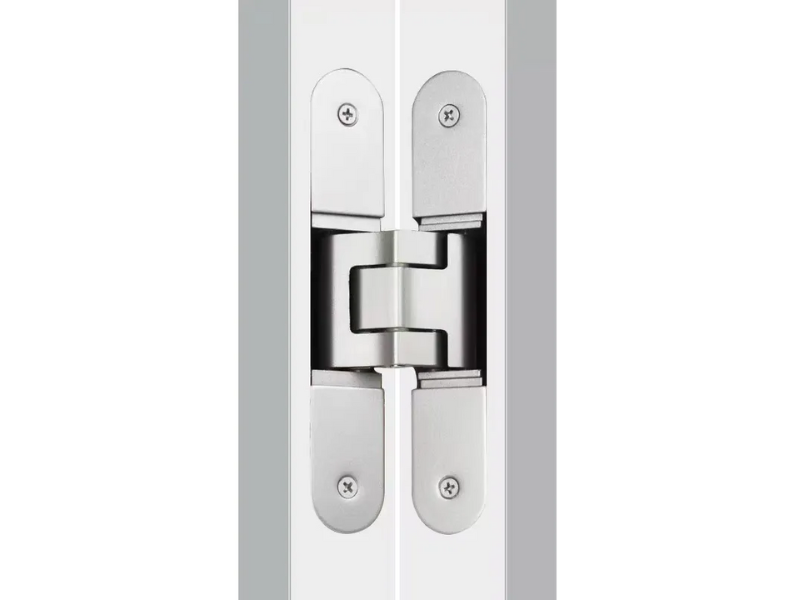
What are Invisible Hinges and How Do They Work?
What are invisible hinges? They are also referred to as concealed hinges, are made for hiding all of their working pieces inside the door and the frame of the cabinet. When the door is closed, you see nothing. They use a hinge cup, which sits below the surface of the door, and is connected by an arm to a baseplate that sits inside the cabinet. More recent versions include an integrated damping system, which is a mechanism that allows the door to close softly and quietly.
These hinges are definitely strong and reliable. They are made to withstand heavy usage. The strongest of these hinges are made to withstand the weight of heavy duty doors to the maximum of 60 kilograms. What sets these hinges apart is their range of motion. They can be opened and moved at a flexible angle. From 90 degrees to a full 180 degrees and anywhere in between. Once set and locked in place with modification screws, these hinges can keep their alignment for a long time post installation. It is fine to keep the hinges in conditions where moisture and humidity is abundant, like in the kitchen and in the bathroom because of the durable materials, like zinc alloy and stainless steel. Their moisture resistant properties is corrosion to ensure a long service. The first step in maintaining these hinges is to understand their use, their intricacies, and how these parts work together.
Key Cleaning Practices for Better Durability
Longevity and reliability begins with cleanliness. Over time invisible hinges are subject to dust and grime build up and the formation of sticky residues on the surface. This increases friction and corrosion which leads to increased wear on the hinges. The good news is that cleaning your hinges is easy and does not require any special materials. The best cleaning methods are the simplest! The first step to cleaning your hinges is to take a soft dry cloth and gently wipe the area around the edge of the door and any visible portions of the hinge mechanism. This dusting prevents any particles from embedding themselves into the moving parts.
If there are sticky spots or difficult grime that make dirt more prevalent, a more thorough clean is probably best achieved by dampening a cloth with water or a mild neutral pH detergent solution, then making sure that no excess moisture is present before wiping the affected area clean and following the job with a dry cloth to make sure that residual moisture is removed from the area thoroughly. It is very important to avoid any abrasive cleaners, especially harsh or acidic ones, as they will lower the rust resistance of the hinge by damaging the protective finish, making more damage likely. Along with avoiding abrasive cleaners, avoid steel wool or rough scouring pads for the same reasons. In the case of hinges from kitchens or bathrooms, this dry and then simple routine can make a huge difference for the hinges to be kept in optimum condition, considering the splashes they will also receive, as they will help prevent grime and dirt from layering quickly.
Keeping Your Invisible Hinges Working Correctly
The one thing you can do to help your invisible hinges operate smoothly and quietly is to properly lubricate your hinges. Although you cannot see the hinges, the metal parts on the inside interface each time you open and close the door. If you do not lubricate the hinges, those metal parts can rub against each other, and over time result in squeaking, difficulty moving, and other signs of malfunction. To make sure your hinges operate smoothly, you should lubricate them with the right products and in the right way. An excellent choice for lubricating hinges is silicone-based products. They provide lubrication without being too oily and without attracting a lot of dust and dirt when compared to products like WD-40.
So how often do you need to do this? A good rule of thumb is to apply a little lubricant every 2 to 3 months for frequently used door and cabinet hinges. This is an easy process. First, make sure that you have a clear opening to the hinge mechanism by opening the door. Apply only a little bit of silicone lubricant to the pivot points and other moving parts. A few drops is all you need. Then, open and close the door slowly a few times to help the lubricant better distribute to all parts of the mechanism. This will help every part get lubricated so that the door can open and close smoothly. After this, remove any more lubricant that has come to the top to make sure that dirt does not settle around it. Doing this can help you keep your hinges moving smoothly so that you can open and close your doors or cabinets without any irritating sounds.
Inspection and Adjustments on a Regular Basis
Invisible hinges can present problems if they are not addressed properly. The same way car tires need to be checked regularly for issues, hinged doors require periodic inspection as well. Every few months, take a few seconds to look, listen, and feel for problems. To begin, open and close the door. Listen for any strange sounds. When opening and closing, check to make sure the door doesn't feel heavier than it should. Make sure the door is moving smoothly in all positions without anything rough or resistant from the side hinges. These are all signs of a problem.
From all angles, gaze closely at the closed door. Verify whether it remains in complete virtual alignment with the surrounding cabinet frame. Observe whether it has started to sag or whether the gaps surrounding the door are uniform. As you open the door, gently try wobbling it. If you notice any looseness, then the hinge screws may need to be tightened. The modern invisible hinges have adjustability built right in. If you find the door is out of alignment, you typically won’t have to remove it. Identify the adjustment screws on the hinge base. These screws typically allow you to fine tune the door's position. The perfect fit and flush closure can usually be adjusted by making changes to the height (vertical position, up or down), side-to-side position (lateral movement, left or right), and the depth (increased or decreased distance, in or out). As part of your routine, these minor adjustments will help keep your installation looking and functioning at its best.
How to Solve Issues and Prevent Problems
No matter the durability of your invisible hinges and despite how well you take care of them, you may still run into some of the issues described below. On the bright side, some of these problems are kind of easy to fix. One easy to fix problem is squeaking or grinding when opening or closing the invisible hinge door. This is most likely due to the invisible hinge needing lubrication. A possible solution to this problem is to apply a silicone-based lubricant. If this still doesn't make it quiet, then consider further steps. Another problem is the door not closing all the way or looking like it is crooked. Luckily, you are able to fix this without the help of a professional. Something to check is the adjustment screws. Most of the time, all it takes is to give a couple of turns to the depth or side to side adjustment screws to fix the door alignment and fully line everything up.
Is your door feeling loose? Moving? It may feel unsteady because screws connecting the door or cabinet to the hinge are loose. Use a screwdriver to check all the screws and tighten them. However, don't screw them down too tight, as that may damage the wood by stripping the screw holes. These kinds of problems can be avoided, too. It is critical to take hinge limits into account. Doors may not be able to take a lot of weight. Children should not hang on a door, and excessive force should not be used when opening or closing them, as this can stress the screws. Moisture is the enemy. Make sure to wipe bathroom hinges regularly to avoid rust. Taking these preventative measures will go a long way in ensuring reliable, trouble free operation.
Your invisible hinges are silent warriors, working behind the scenes to maintain the sleek functionality of your furniture. Maintaining them should be just as subtle. Knowing the proper techniques really makes an impact when it comes to hinge performance, and it's nothing complicated. Just keep an eye on the little things; just a few intervals of cleaning with a soft cloth, a visual inspection to check for alignment every other month, and a few seconds squirting silicone lubricant to keep the hinge moving smoothly. These all significantly bolster hinge performance while extending the periods between maintenance. It's as easy as that. A high-quality hinge should open and close smoothly and without any audible friction, and proper hinge maintenance helps keep things that way. For the years to come, you can trust in the smooth and silent functionality of your invisible hinges, but first, do a little maintenance. Your invisible hinges will thank you for the peace and quiet!