 EN
EN


Troubleshoot Heavy Duty Concealed Hinges: Expert Advice
The Mechanics of Heavy Duty Concealed Hinges
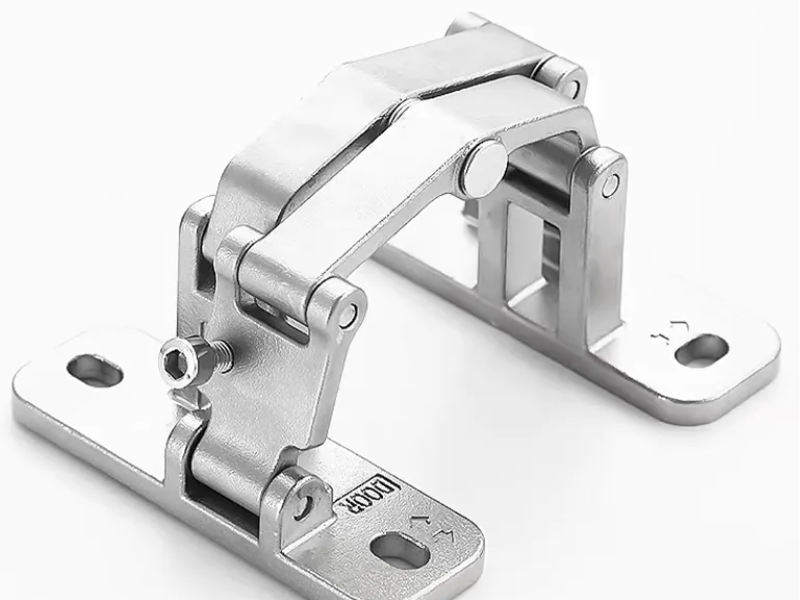
Let's discuss the Heavy Duty Concealed Hinges. These pivots are the silent workhorses that bear and hinge the massive weight while taking constant use without any signs of distortion and keeping their sleek and modern lines. These are found in the front of commercial settings, high end cabinetry, and thick heavy doors where both strength and design are the focus. Unlike their surface mounted cousins, these hinges are engineered to sit within the door and the frame to give a clean and pull front. Their concealed nature means the adjustment mechanisms are hidden, which is good for design, but diagnosing problems can be a bit of a puzzle.
In order to perform reliably, hinges must be made of tough materials, be well-engineered, and have a multitude of points of adjustment. Usually, a hinge comprised of a cup that is recessed into a door and an arm that connects to a cabinet/door frame. Good quality hinges, such as those made by specialists like Sevilo, have features such as full steel construction, tough bearings, and adjustment screws for alignment to be set during installation. The heavyduty hinges are able to manage significant load due to reinforced arms, additional knuckles, or a specific type of bearing that spreads the weight and stress of a hinge. With this type of information, troubleshooting is easier because you are able to assess how it was meant to work.
The most commonly reported issues and their symptoms
Before using any tools, try to gather the details first. Hidden hinges usually don’t fail in an obvious or drastic manner without some initial symptoms of failure. They tend to fail quietly but provide signals, and interpreting these can help to avoid time and damage.
A door that sags or drags is a common problem. You may open a door and notice the bottom corner scraping the frame or the door does not close flush. This may be due to new hinges or wear on the bottom hinges and hardware. Now, listen closely. Is there grinding, squeaking, or popping when the door opens? This may be the most annoying problem. The door may scream for help due to a lack of grease, debris in the mechanism, or a failing bearing. An obvious sign may be that the door feels loose or wobbly on the hinges. This directly points to missing screws, worn hinge components, or the hinge closing to the frame.
Issues can come from the actions done. For example, a hinge that's too stiff doesn't let the door move, whereas a hinge that's too loose makes the door swing open and close repeatedly. This is related to the tension adjustment mechanism inside the hinge, if one is present. The hinge can also rust, corrode, or crack, especially in the moist environments of bathrooms and kitchens.
How to diagnose hinge issues, step by step
You’ve noticed the problem and now what? Jumping straight to tightening screws won’t get the job done. Instead, take a step-by-step methodical approach. Start from the simplest issues and work toward the more complex.
To begin, determine where the problem lies. Is it a single door or multiple doors? If multiple doors, this indicates a larger problem like a shifting frame or structural issues. If it is just one door, it is time to narrow your problem, and selling your attention to that door. You will start by doing a visual and physical inspection. Clean the area surrounding the door hinge, and while doing this, open and close the door slowly, paying attention to resistant spots, listening to strange noises, and watching the door frame while the door swings open to notice any sudden changes.
Then, move on to checking the fasteners. This is the most common issue. The accordion screws that hold the hinge cup to the door and also the screws that hold the mounting place to the door frame can slowly turn loose due to constant cycles, vibrations and a strong changes to the door. Now, all you need to do is to grab a flat head screwdriver or a hand, turn all of the screws that you see on the hinge frame and the hinge arm. The carefulness comes when you don to screw them in too hard, or you may end up stripping the screws, or even worse, the final material surface where you put the screw in. So, if, during turning, is turning freely, also known as spinning, the screw is cause the mounting hole to have the material to be stripped, and that screw hole would need to be repaired, and that repair can be done by just letting the screw go down further, or to use an epoxy fill.
If the adjustments don’t fix it, move to the hinge adjustments. Most premium quality heavyduty concealed hinges have at least two and, often, three adjustment screws. These let you adjust the door position in three dimensions. One adjustment screw adjusts the door closer to or further away from the door frame. Another one adjusts the door horizontally and one adjusts it vertically. For the exact position and function, you could check the hinge manufacturer’s manual or the information tag that is often located on the hinges. Make small adjustments and changes, no more than a quarter turn at a time, and then check how the door operates after every single change you have made
Now, let’s get into fixing the specific problems that you have highlighted
If a door is sagging, adjust the door screws. If screws are present, do the up and down adjustment, then do the side to side and in and out adjustments. If the screws are mounted, loosen the screws, pull the door up, and tighten the screws. If the problem continues, the hinges may need to be replaced.
If a door squeaks and grinds, it may need to be cleaned and oiled. Use a light machine oil, or dry, no-stick oil, to lubricate the hinges. Try to move the hinge to work in the oil. If the door continues to squeak, there may be a problem with the hinges and they may need to be replaced.
Having a loose or wobbly door is a sign that there is a problem with the hinge substrate. Substrate is the wood or board material that the screws bite into, which means the material has become compromised. To alleviate this issue, you should remove the hinge, then fill the old screw holes with a wood filler that is epoxy based. You can also use dowels that are glued into the holes and are meant for wood. After the filler is cured, you can drill new holes into the substrate and remount the hinge. If you have a metal frame, try using a thread locking compound with the screws, or you may have to retap the holes to use a larger screw.
If a door either doesn't stay closed or if it swings closed very quickly, there is usually a problem with the hinge that has integrated tension or has a separate closing device. Some heavy duty hinge sets have a small screw that is used to increase the tension of the spring. Turing this screw clockwise usually makes it so that the door has a tighter closing mechanism. If there still is a problem with the closing of the door, the spring inside may be broken and the hinge will have to be replaced.
Security hinges maintenance prevention issues hing repair
Did you know that soft maintenance can prolong the life of your heavy duty hinges? This saves you the hassle of troubleshooting other issues, which is always a plus. This is similar to the oil change of a vehicle where you get a routine maintenance done to prevent a larger minor failure.
Make a maintenance schedule and get it done every 6 to 12 months. This will take a couple of minutes for every door. With the soft cloth, remove the dust from the hinges, the area, and remove the grease that can attract moisture. Use a small lubricant for the pivot points. A light oil is recommended. Heavy grease will later on attract dust more. For long term, it is not recommended to use wd40. Although it is a great water displacing cleaner it can leave a sticky residue and also dries out.
At this point, to complete this inspection, perform a `preventive tighten,`. Lightly check the tightness of some pivotal screws across multiple doors. It is easier to repair a loose screw before it has completely unthreaded itself, rather than to repair a stripped screw hole. Finally, consider the load. Heavy-duty hinges come with weight limits. Make sure you are not exceeding that limit, and remember to always use the appropriate number of hinges based on the size and weight of the door, as the manufacturer suggests. Properly distributing the load is the most important aspect to ensuring a long life.
When to Repair and When to Replace with Quality Hardware
You have the diagnostics under control, you have done the adjustments, and perhaps even a repair attempt. How can you know it is time to stop working with the old hinge and to install a new one? Very clear economic and practical guidelines.
For hinge replacement, it must show metal fatigue by bending, cracking, pitting, or corroding of the metal. If the hinge feels impossibly stiff or too lose that it cannot be adjusted, that means the internal mechanism of the hinge has broken. If the hinge feels like it is not able to hold the weight of the door after adjusting, that door might be drooping or sagging. If the hinge bearing is grinding and will not get quiet after being cleaned and oiled, it is also time to replace the hinges.
Do not replace the hinge with the cheapest option. It is important to invest in high-quality hinges from reputable companies like Sevilo. It is important that the hinge has all-steel construction. If possible, pick hinges with soft-close options and with more than two or three screw adjustment points. Lastly, make sure that the hinges can hold more than the weight of the door and that it has a protective coating from rusting especially in a humid environment. Quality hinges also mean fewer adjustments and repairs in the future.
Putting in a new hinge works best if you know how to do it correctly. A good hinge can be ruined if it is installed wrong. Always use the screws included with the hinge. If you are mounting the hinge into wood, drill a pilot hole. Pilot holes should be slightly smaller than the screw's core. This is to ensure a stronger grip with the wood, and to prevent the wood from splitting. For cabinets, you need to make sure that the hinge cup is bored to the correct diameter and the right depth. Taking time with the screws so that everything is lined up correctly goes a long way. A centered and careful installation of the hinge is in everyone's best interest so that it can be used for a long time and used quietly.