 EN
EN


Heavy Duty Concealed Hinges: Finding the Right Fit
Have you ever entered a room and wondered how some doors seem to float without showing how the doors are attached? Because the doors appear to be flush with the wall, they leave a clean, uninterrupted look to the room. That effect is thanks to the heavy-duty concealed hinges on the door. These hinges do not look the best, but they are very durable and made to withstand and perform heavy-duty tasks on a daily basis while still remaining hidden. These hinges are essential for attaching large doors like entrance and soundproof doors, and for sleek cabinets used in commercial kitchens. Choosing the right concealed hinge is important, and hinges should be chosen based on their appearance and design balance. Finding suitable hinges among the many available options can be tricky, but each is made for a specific purpose. In this post, we explore the benefits and different types of heavy-duty concealed hinges and review the most important deciding factors for each hinge. You will learn how they balance safety and aesthetics, the materials used, and the overall hinge design.
When planning a project that requires a sleek design and ultimate strength, durability, and functionality, look no further. Let’s figure out how to determine the perfect heavy-duty concealed hinge.
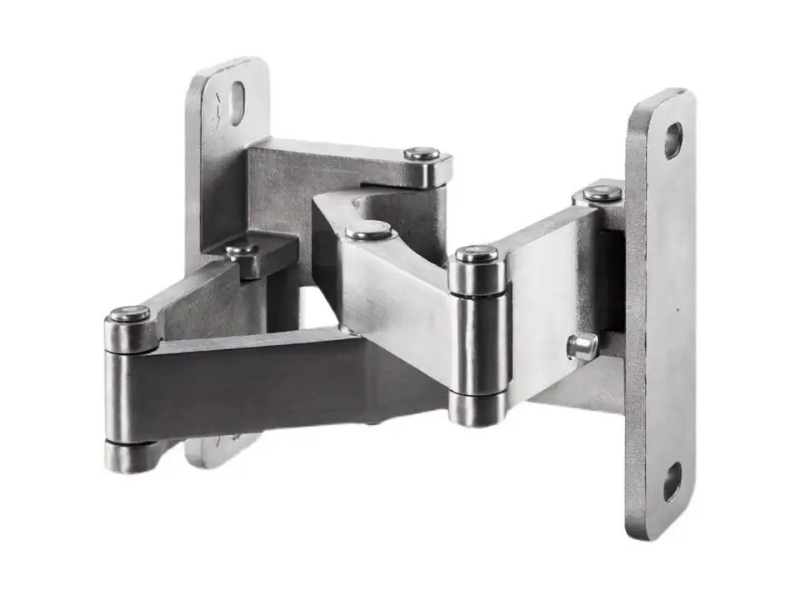
What are concealed hinges?
What are heavy-duty concealed hinges? Yes, it’s a hinge that doesn’t exist! Just kidding, but consider this: a fundamental feature of a hinge is that it is visible, but this hinge is fully concealed behind the door and can hold an incredible amount of weight with no noise. These are hefty concealed hinges. While regular hinges show their knuckles and leaves, a concealed hinge’s knuckles are hidden. The leaves of the hinge are also concealed from plain view by being inserted into a pocket, cut into the hinge’s frame. The nice thing about hidden, or concealed hinges is that they present a fully smooth, clean, and unbroken architechtural surface when passing by a door. They were once rudimentary pivots but are now sophisticated devices that can hold doors and panels 100 kgs and are some heavy-duty, detached, and concealed hinges.It’s easy to explain why people like these hinges so much. To begin with, these hinges are very elegant and stylish, giving off a modern look. They make the door hardware disappear from view so people can admire the door and the wall it’s attached to. Then, because they are so sturdy, they are always engineered to last. They are perfect for high-traffic areas like busy hospitals with heavy fire doors, or high-end hotels with large entrance doors, and are designed to be opened and closed frequently. In these situations, the hinge must be extremely durable, trustworthy, and dependable. They’re also concealed, making them even more secure. They are the hinges that make sure everything runs well and are there all the time, even if you can’t see them.
Types of Heavy Duty Concealed Hinges
Once you start searching for heavy duty concealed hinges, you will realize there are different kinds for different uses, one of which is the pivot hinge. Pivot hinges are typically used for large, heavy doors and work by having pivot points at the top and the bottom of the door. This design allows the door to swing open and close smoothly, plus it can support more weight than other hinges because the load is distributed vertically. These are often seen in commercial buildings for main entrances, and in modern homes for large floor to ceiling doors. Another very popular type is the flag hinge, which is shaped like a flag. A great example is the heavy duty concealed detachable flag hinge is designed for easy removal, and is engineered to support heavier weights, around 120kg. To reduce wear and tear, these hinges also include sealed bearings in the pivot.
Then there are heavy-duty kinds of cabinet hinges, which are made for oversized storage units or furniture. Generally, they support less weight compared to door hinges, but they are still necessary for things like industrial cupboards or big entertainment units. If you want, for example, some hinges of certain types, there are also certifications for those. Some of these concealed hinges, for instance, are rated for fire and corrosion-resistance, which is important for all commercial and residential safety. Also, there are some clever concealed sliding door systems that have no visible tracks or wheels in the floor, keeping a neat appearance while still being fully functional. The type also goes to the materials. Stainless steel hinges are perfect in terms of corrosion resistance, which is a must in humid areas like a bathroom or coastal location. Other common types are zinc alloy or zamak, and they also have their own characteristics concerning strength and durability. Knowing these types helps to narrow it down to which hinge best fits your particular door and surroundings.
Important Things to Consider When Choosing a Hinge
The first thing to keep in mind when selecting a heavy duty concealed hinge is that it is not just about strength. Choosing the right hinge depends on many variables and how they interplay to give a perfect and durable fit. The first variable to consider is the load capacity. This is the amount of weight a hinge can support. It is best to know the weight of the door in order to select a hinge that can support above that weight. For instance, if your door is 100 kilograms look for a hinge that can support 120 to 130 kilograms. This is because you want to give a margin of safety for the hinge, and to ensure that the hinge can function for years to come. For instance, some heavy duty flag hinges are meant for ultra high load applications, and can support 120kg . If you go the other direction, you run the risk of premature failure, sagging doors, and safety issues .
Next is the quality of the material and its strength. The choice of hinge material and its strengthalso has to do with the hinge's durability and resistance to the elements. For heavy-duty concealed hinges, stainless steel, especially SUS304, is one of the best due to its great strength and high resistance to corrosion. This makes it good for indoor as well as outdoor uses. There are steel and zamak versions of hinges, and their corrosion resistance abilities are different. The hinges’ material strength is often associated with its hardness and tensile strength, which ensures the hinge does not permanently change shape when subjected to pressure. Another important factor to keep in mind is resistance to corrosion. If the hinge will be placed in a bathroom, a kitchen, or an exterior door, it will be subjected to moisture and high humidity. A fully zinc galvanized surface or stainless steel construction will provide long-lasting corrosion protection. Besides, consider the range of the articulation--the degree to which the door has to open. There are hinges that can swing open completely and make a 180-degree turn, while others only make a 90-degree turn. The method of installation cannot be overlooked; most concealed hinges require exact mortising or screwing into preset drilled holes, and that is why you should make certain that your door and frame can allow that. Last but not the least, remember maintenance.
Having open bearing designs makes lubricating hinges easier. This makes it easier for hinges to work seamlessly for years. Looking at these factors closely helps you to steer clear of common problems when choosing a hinge that can be relied upon to work.
Installation and maintenance know-how
Understanding how to install heavy-duty concealed hinges takes a little bit more skill than with a regular hinge. It is a highly precise process. Usually, the first step is to mark and cut out the recesses, or mortises, in both the door and the door frame where the hinge leaves will sit. This cut has to be flush to be level and not stand out. For dozens of heavy-duty concealed hinges, you will likely require a robust set of tools such as a chisel, a router, and jig to control how the cut runs, as well as how deep the cut is. The hinge is then held in place with screws. It is crucial to use the right screws, as those with particular thread patterns will give a better grip, highly needed for really heavy doors. The hinge is the part that is concealed, so if the screws are not aligned properly, it will be near impossible to fix later, which can result in the door swinging to improper angles or sagging over time. Therefore, it is best to hire a seasoned installer for heavy doors to get it right the first time.
After your heavy duty concealed hinges have been installed, you will want to maiten them routinely to ensure they continue to function smoothly for many years to come. Although concealed, you will want to keep in mind they are mechanical parts and will need your attention periodically. The first step in maintenance is regular cleaning. To provide proper care, you can wipe clean the edges of the door and use a small tool to clean the build up from the hinges every so often. Be sure to check for signs of rust on the stainless steel hinges in damp locations. To keep hinges functioning smoothly, proper lubrication is needed. Some of the concealed hinges have open bearing designs which make for easy lubrication. To prevent squeaking and keep everything moving smoothly, a silicone based lubricant should be used every couple of months. It is then possible to identify door issues, such as sagging of the door or difficulty in proper closure. This should indicate the need for adjustment of the hinges. Most of today’s concealed hinges have a simple adjustability feature to help make small tunings to the position of the door if needed. Otherwise, you will want to make sure that if a hinge is damaged or is showing signs of heavy usage, then replace it right away to prevent any extra strain from being placed on the door and other hinges.
Being proactive about caring for hinges can actually extend how long they last.
Fidning the Balance in the Real World
Real life applications for hinges come down to choosing the balance between good solid functionality and beauty for your design. It's not always a simple balance. A hinge needs to able to withstand years of being used, but at the same time, you want it to be hidden so you can maintain a clean and intentional aesthetic. Take the example of a high end retail store. The goal in design is to create an upper level immersive and elegant atmosphere. Heavy duty concealed hinges are perfect for display cabinets or main doors to ensure the hinged hardware is hidden and doesn't distract from the merch, while also standing up to the needed durable usage for high customer traffic. The same idea is seen in a modern residential home. A hidden door to a home office or theater room can be a fun surprise and design statement with concealed hinges that support the weight and proper functioning of a door styled to look like a bookcase.
There are many different success stories. One success story comes from a big commercial venture, like building a hotel. The front entrance doors are heavy, not only for security and for insulation, but also for looking good. Heavy duty concealed pivot hinges offer a smooth operation for doors of great size, and maintain a good level of security, but also have their mechanical working parts hidden. Another success story involves hospitals and their heavy, soundproof patient room doors. The concealed hinges bear the weight, and also maintain the soundproof seal. Smooth surfaces, no hinges, no crevices make the doors much easier to maintain and to clean which aligns with the calming, seamless design. These stories have a downside, however. From a tablet of pure design, the creative hinges could become the most expensive, or require meticulous installation. Or, the working hinges could become larger to accommodate their added load, which would require a larger mortise in the doorDesign intent from passive door hinges can be difficult to achieve, but the most pure design hinges could require control passage at the motor. By balancing the style and the dry mechanical elements of a passive control system. The balance of design and dry mechanical device can also include concealed door control hinges to align with the passive control system. The load of the device can also accommodate a higher style of the control door hinges to maintain a higher design.
Conclusion
You’ve seen heavy-duty concealed hinges go from simple hardware to an essential finishing element that offers both design versatility and strength. We studied their core functions, types, and defining characteristics: load capacity, material strength, and corrosion resistance. We also covered how proper installation and routine maintenance best utilize these hinges, providing longevity. The right hinge, your hinge, will define the door and dictate how the room feels. It will certainly feature the safety, durability, and “clean modern look” that best suits the project. You shouldn’t hesitate to consider them professionally for your next project, custom home, or commercial space. The end product will be magnificently seamless and inconspicuously functional.